Custom Website Development for Businesses that Need More than a Standard Website.
Not every website is meant to do the same job.
After years of building websites for businesses across different industries, one thing becomes clear very quickly. Some websites exist to look good and generate enquiries. Others need to do far more. They need to manage bookings, availability, products, users, or private communication as part of the business itself.
This is where custom website development matters.
We’ve built platforms that support local marketplaces, holiday rental websites with live calendars and pricing, private membership portals, and ecommerce systems where products don’t fit neatly into a standard “add to cart” model. In each case, the website isn’t just supporting the business, it’s actively used every day by real people who rely on it working properly.
When a website is built around how a business actually operates, everything works better. Users get a smoother experience, internal processes become simpler, and the site can grow alongside the business instead of becoming a limitation.
Let’s break down the different types of custom websites we build, why standard websites often fall short, and how the right functionality can turn a website into a practical, long-term asset rather than just an online presence.
What Is Custom Website Development?
Custom website development is about building a website around how a business actually works, rather than forcing the business to fit within the limits of a template.
In practice, we see three common types of websites.
- Template websites are built on pre-designed layouts with fixed structures. They work well for simple needs, but functionality is limited and changes often require workarounds.
- Semi-custom websites sit somewhere in the middle. The design and content are tailored, but the underlying structure still follows a set framework. These can be a good stepping stone, but they usually come with constraints once a business starts to grow or needs more control.
- Fully custom platforms are different. These are built from the ground up with functionality in mind first. User accounts, booking logic, product rules, integrations, and workflows are planned early and designed to support how the business operates day to day.
From experience, this approach leads to far better outcomes. Instead of bending processes to suit a website, the website supports the processes. The result is a system that’s easier to use, easier to manage, and far more adaptable over time.
Custom website development isn’t about adding complexity for the sake of it. It’s about removing friction, improving accuracy, and building something that continues to work as the business evolves.
Lets break down the types of custom websites we can build and share a few examples.
Marketplace & Platform-Based Websites.
Marketplace and platform websites are very different to traditional business sites. They’re built around users, data, and interaction, not just pages and content.
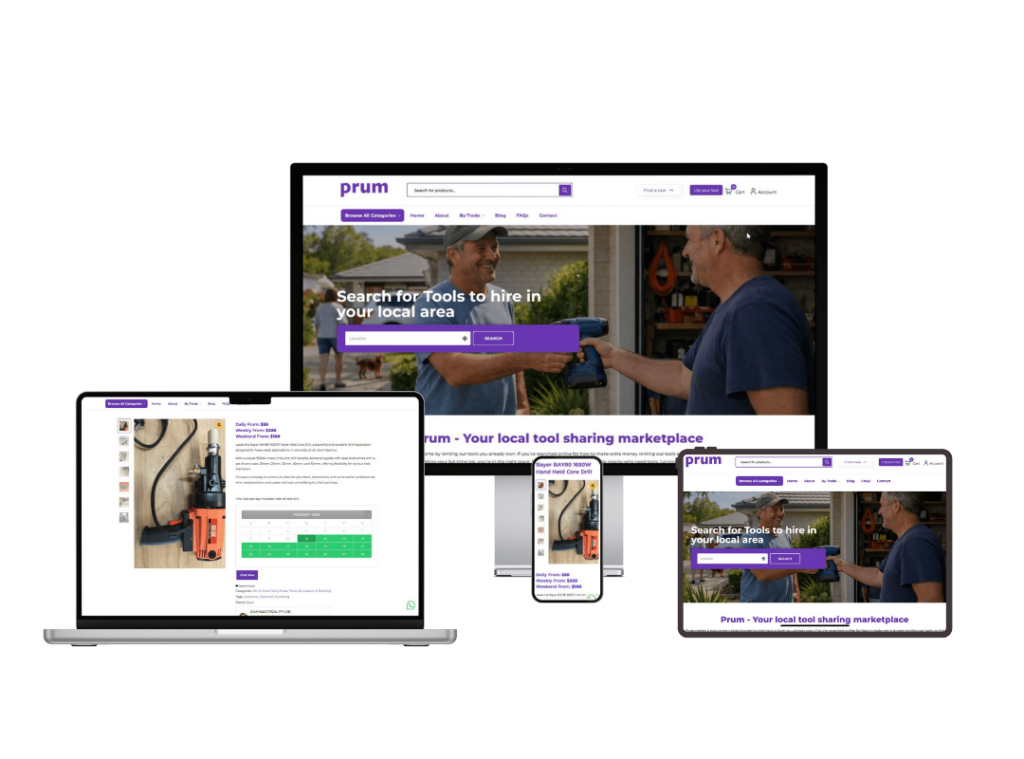
We’ve built sites such as Prum, a local tool-sharing marketplace designed to connect people within their community. In projects like this, the website is the product.
These platforms typically support multiple user roles, including people listing or leasing items, people browsing or hiring them, and an overarching administrator who manages activity, approvals, and platform integrity to ensure everything runs smoothly.
Key considerations in these builds include:
- User Accounts & Profiles Users need clear, intuitive access to their own listings, activity, and interactions. If this isn’t simple, adoption drops quickly.
- Listings, Availability & Logic Marketplaces rely on accurate data. Availability, locations, and conditions need to be reliable, otherwise trust is lost fast.
- Search & Discovery Users expect to find what they need quickly. That means thoughtful filtering, location-based results, and clear presentation.
- Administration & Moderation Behind every successful platform is a solid backend. Admin controls, moderation tools, and oversight are essential for long-term stability.
Custom Holiday Management Websites.
Booking, Availability & Data-Driven Sites.
Websites that rely on live data need to be treated very differently to standard content sites. Accuracy, performance and reliability aren’t nice-to-haves, they’re critical.
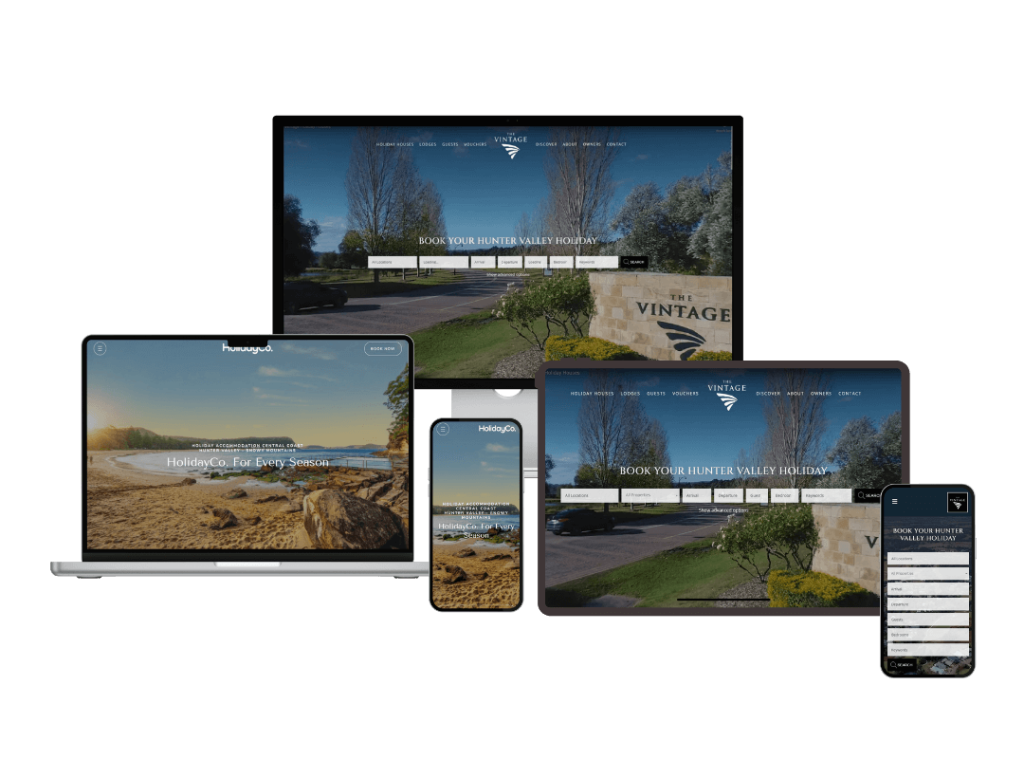
We’ve built booking and availability-driven platforms like HolidayCo. and The Vintage, where the website plays a direct role in day-to-day operations. In this case, the sites are not just displaying information. It’s actively managing accommodation availability, pricing and bookings across multiple locations.
These types of websites typically involve:
- Live Availability & Calendars
Availability needs to be accurate at all times. When people are booking accommodation, even small discrepancies can lead to lost trust or costly errors. - Dynamic Pricing & Rules
Pricing often changes based on seasons, length of stay, demand or property-specific rules. This logic needs to be built into the website rather than managed manually. - Multi-Site & Scalable Structures
In larger setups, multiple websites may share the same underlying data while targeting different locations or audiences. This requires careful planning so everything stays in sync. - Integration With External Systems
Booking engines, property management systems and payment gateways all need to work together seamlessly. If one part fails, the entire experience suffers.
Membership & Private Community Portals.
Not every website is designed for the public. Some are built specifically to support communication, collaboration, and secure access for defined groups.
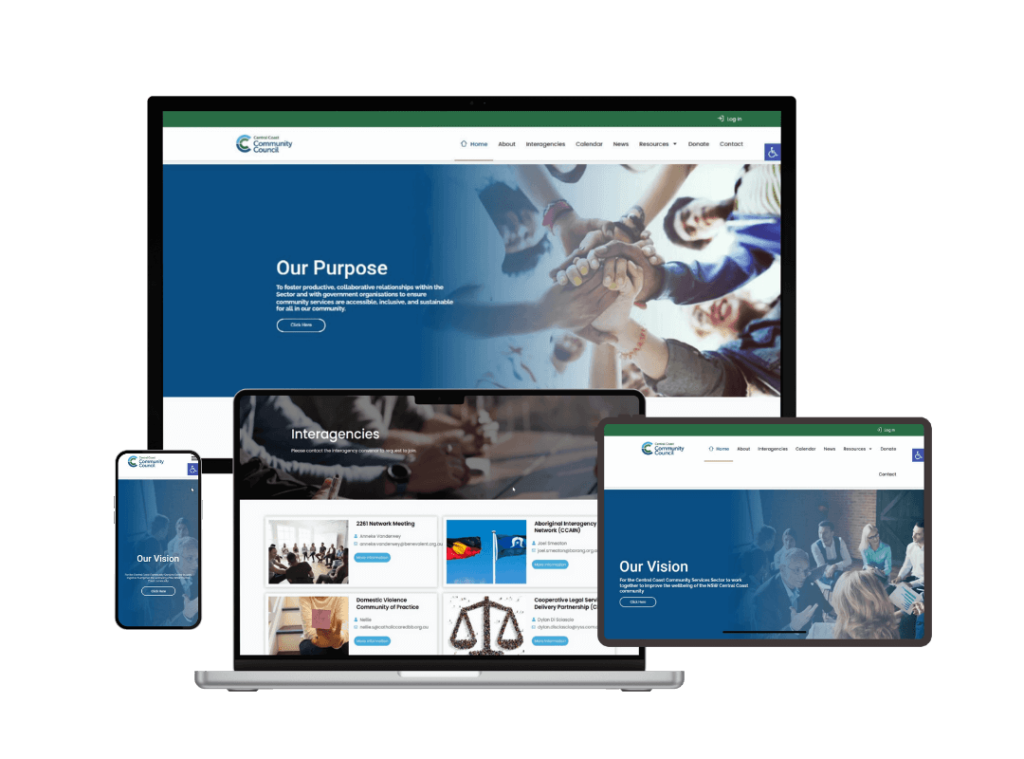
We’ve delivered membership-based platforms like Central Coast Community Council, where the website acts as a private, Facebook-style environment for inter-agency communication. For this project, we used the BuddyBoss theme as the foundation, then tailored it to suit how the organisation actually needed to communicate and manage members. This is a way we can build these sites with a lot of functionality at an affordable price.
These platforms typically focus on:
- Controlled Member Access
Users need clear permissions based on their role. Some content is shared broadly, while other areas require restricted access. - Groups, Discussions & Messaging
Private forums, group conversations and direct messaging allow members to communicate in a structured way without relying on public social platforms. - Secure Information Sharing
Documents, updates and resources need to be shared safely, with confidence that access is limited to the right people. - Administration & Oversight
Moderation tools, user management and reporting are essential to keep the platform organised and usable over time.
These sites succeed when simplicity is prioritised. If members can’t easily find information or communicate, the platform won’t be used. The goal is always to support connection and collaboration without unnecessary complexity.
Advanced Ecommerce & Custom Ordering Systems.
Not all products fit neatly into a standard ecommerce setup. In many industries, pricing, quantities, and variations need to reflect how products are sold in the real world, not just online.
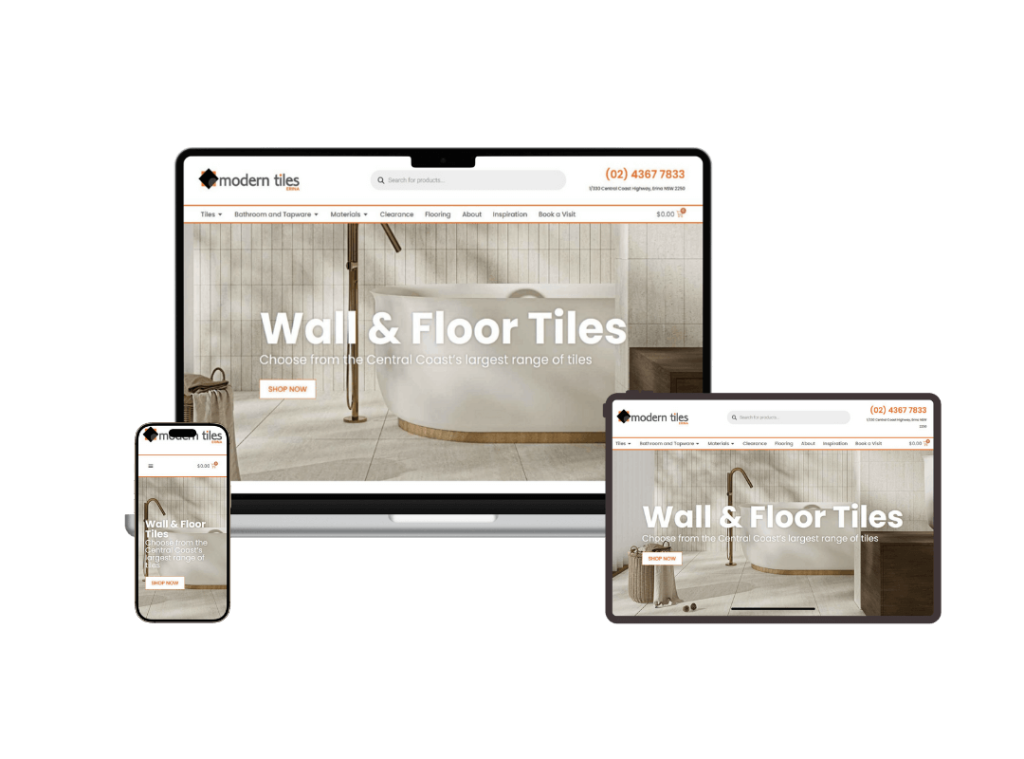
We’ve built custom ecommerce solutions like Modern Tiles, where ordering logic goes well beyond a basic cart. Tiles can be purchased by the box or by square metre, with multiple variations per product, and pricing that needs to remain accurate regardless of how the customer orders.
These types of ecommerce websites typically require:
- Custom Quantity & Pricing Logic
Customers need to order products in ways that make sense for the product, not the platform. This often involves calculations, conversions, and safeguards to prevent incorrect orders. - Product Variations That Stay Clear
Multiple finishes, sizes, and options need to be presented clearly so customers understand exactly what they’re ordering. - Accuracy Over Automation
When quantities or pricing are wrong, it creates real problems offline. These builds prioritise accuracy and clarity over unnecessary automation. - A Simple Buying Experience
Even with complex logic behind the scenes, the ordering process needs to feel straightforward for the customer.
How We Approach Custom Website Development.
Custom website development works best when functionality is planned early and built with real-world use in mind.
Before any design or development begins, we take the time to understand how the business operates day to day. That includes how bookings are managed, how products are sold, how users interact with the site, and where time is being lost through manual processes.
From there, we map the required functionality first. What needs to happen automatically? What needs to integrate with other systems? What needs to stay flexible as the business grows? Answering these questions early avoids workarounds later.
We also design with scalability in mind. Whether it’s adding new locations, expanding product ranges, or introducing new user roles, the structure needs to support growth without needing to be rebuilt from scratch.
Just as importantly, we focus on keeping things practical. Custom development isn’t about overengineering. It’s about building systems that are clear to use, easy to manage, and reliable over time. This approach leads to websites that don’t just launch well, but continue to perform as the business evolves.
Custom Websites Built to Scale.
Many businesses start with a clear goal, then evolve over time. More users, more locations, more products, more data, or more internal processes. When a website is designed with scale in mind from the beginning, these changes feel like natural extensions rather than major rebuilds.
This might involve:
- Expanding from a single site into multiple locations or regions
- Supporting additional users, members, or contributors
- Adding new functionality without disrupting what already works
- Integrating new systems as the business matures
The difference between a site that scales well and one that struggles later usually comes down to early decisions. Structure, data flow, and flexibility matter far more than squeezing everything into a setup that only works in the short term.
The goal isn’t to overbuild. It’s to create something stable, adaptable, and ready for what comes next, even if that next step isn’t fully defined yet.
Is Custom Website Development Right for Your Business?
Custom website development is not about complexity for its own sake. It is about building a website that supports how your business actually operates.
A custom approach is often the right fit when a website needs to handle more than basic content or enquiries, such as:
Managing Core Business Functions
Websites that manage bookings, users, products, data or internal workflows need structure and logic that standard setups are not designed to support.
Reducing Manual Work and Workarounds
If your team is spending time updating multiple systems, fixing errors, or working around platform limitations, the website is no longer supporting the business effectively.
Improving Accuracy and User Experience
The right functionality improves accuracy behind the scenes and creates a smoother experience for customers, members or internal teams.
Supporting Future Growth
A website should be flexible enough to support change, whether that involves new services, locations, products or users.